
Voice to Estimate App for HVAC Contractors: Speak the Scope, Send the Quote
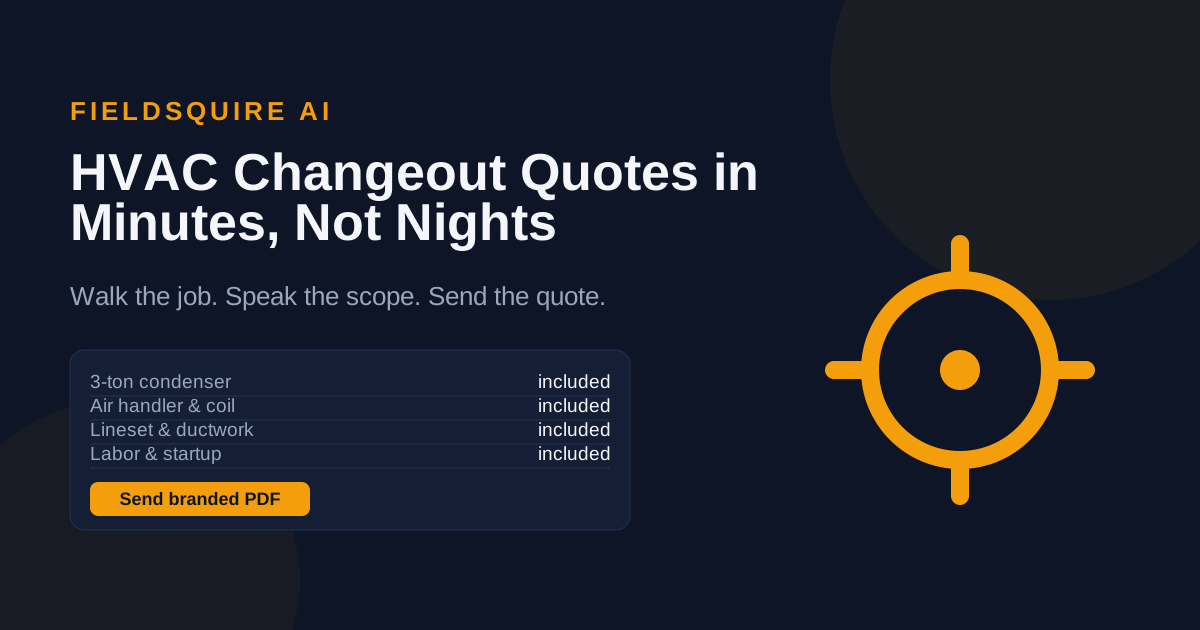
You already say every estimate out loud. You explain the changeout to the homeowner at the door, brief your helper on the lineset, and think through the duct fix while staring at the plenum. A voice to estimate app for HVAC contractors takes the version of the estimate that already exists — the spoken one — and turns it into priced line items, instead of making you reconstruct it on a keyboard at night.
Typing is the bottleneck nobody prices in
An experienced tech can scope a 3-ton changeout in ten minutes of walking and looking. Turning that scope into a written quote takes most shops another hour: retype the equipment, remember the materials, look up prices, format a PDF. Multiply by every estimate in a busy week and typing becomes the most expensive unbilled labor in the company. A voice to estimate app attacks precisely that hour. Speaking is faster than typing for everyone, and it's dramatically faster on a phone, in gloves, on a roof — the places HVAC estimates actually get scoped.
How voice becomes line items
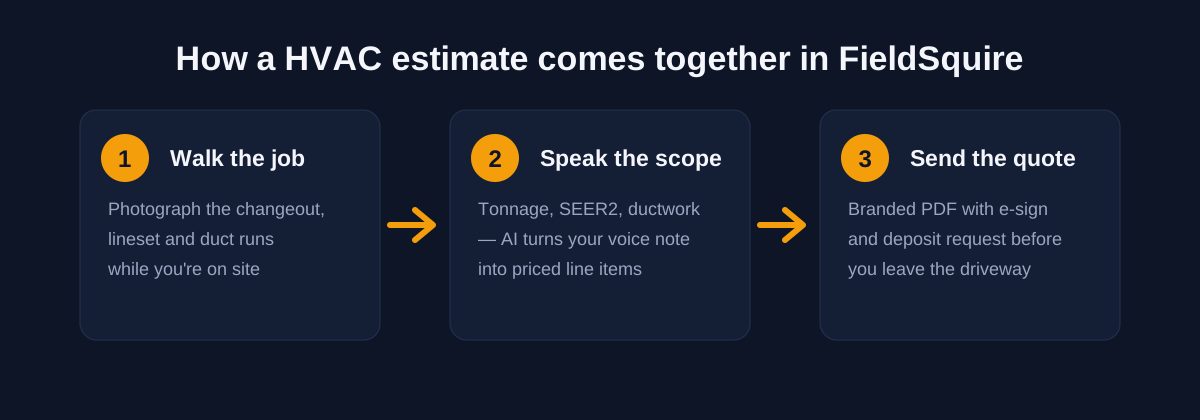
Here's the FieldSquire flow on a real call. You walk the job, taking photos of the condenser data plate, the air handler, the ductwork. Then you record the scope in plain trade language: "Replace 3-ton condenser and matching evaporator coil, 14.3 SEER2, flush the lineset, new filter drier, new float switch, seal the supply plenum, haul away the old unit, permit and inspection, startup and commissioning."
The AI drafts that as an editable line-item estimate and prices it from your own price list. You review it on screen — bump the labor, fix a quantity — and every correction teaches the pricing for next time. The customer never sees your margin on each line; they see a clean branded proposal with an e-signature link. That whole loop lives inside the FieldSquire HVAC estimating app.
Dictating a scope that prices itself cleanly
A little structure in how you talk pays off in the draft. Lead with the system: type, tonnage, efficiency. Then tasks in order: demo, set, connect, modify. Name materials specifically — "30 feet of 3/8-7/8 lineset," not "some copper." Flag access and site factors out loud: attic air handler, crawlspace ducts, crane for a rooftop condenser, because those are labor multipliers. Finish with the closeout items every install carries: permit, thermostat programming, startup and commissioning, haul-away of the old equipment. Ramble if you must — the AI sorts it — but specific nouns and quantities come back as cleaner line items with less editing.
Why a voice to estimate app for HVAC contractors works so well
HVAC scopes are dense with standardized parts — tonnage, SEER2 ratings, coil matches, lineset sizes — which makes spoken scopes unusually machine-readable. And HVAC estimates are urgent: a family with a dead furnace in January books whoever quotes first. Voice capture plus on-site sending collapses your quote turnaround from days to minutes, which is the same reason we recommend phone-first estimating in general — see our guide to the mobile HVAC estimate app for field techs. Still quoting from a spreadsheet? The template vs estimating app comparison shows what the switch actually changes.
Voice to estimate app questions HVAC contractors ask
How accurate is voice-to-estimate for HVAC terminology?
The output is a draft you review, not a finished contract. FieldSquire's AI turns your spoken scope into editable line items and applies your price list; you check quantities and wording before anything sends. Corrections you make also teach the pricing, so drafts get closer to final over time.
What should I actually say when dictating an estimate?
Talk like you're briefing your installer: system size and type, each major task, materials, access issues, and closeout items. Specific nouns and quantities — "40 feet of lineset," "two-stage 80,000 BTU furnace" — come back as cleaner line items than vague descriptions ever will.
Does voice capture work with photos, or instead of them?
Together. Photos carry the facts — data plates, tonnage, lineset condition, duct layout — while your voice carries the plan. FieldSquire combines both into one draft estimate, and the photo record backs you up if scope questions come up after the job is sold.
Your next estimate is already in your head — say it out loud and see what comes back. Start a 14-day free trial and run one real job through the voice-driven estimating app for HVAC contractors.