
Voice to Estimate App for Electricians: Speak the Scope, Get the Quote
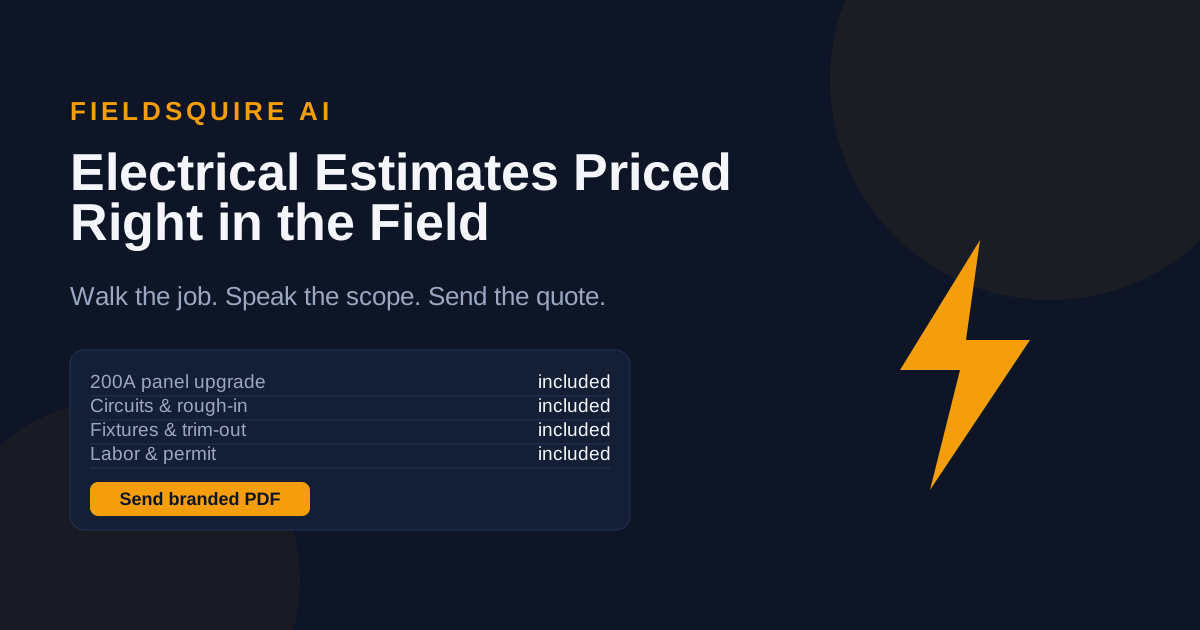
Your hands are full on a walkthrough — flashlight, panel cover, tape measure — but your voice is free, and a voice to estimate app for electricians puts it to work. Instead of juggling a notepad in the crawlspace, you describe what you see: "Sixty-foot run to the detached garage, one-inch conduit, 60-amp subpanel, two 20-amp circuits, GFCI protection." Minutes later that narration is a drafted, editable estimate on your phone. This post covers how the workflow runs and how to narrate a job so the draft comes back tight.
Why speech beats scribbles on electrical walkthroughs
Electrical scope is dense with quantities and conditions, which is exactly what handwriting loses. A notepad says "kitchen — outlets"; a voice note says "kitchen: two 20-amp small-appliance circuits, four GFCI receptacles, one under-cabinet lighting run, plaster walls." The spoken version carries what pricing needs — counts, amps, wire types, access conditions — with no transcription step where details drop out. And speaking is faster than writing while you are on a ladder or holding a meter. You already narrate jobs to apprentices and inspectors; this is the same habit pointed at a microphone.
How the voice-to-estimate workflow actually runs
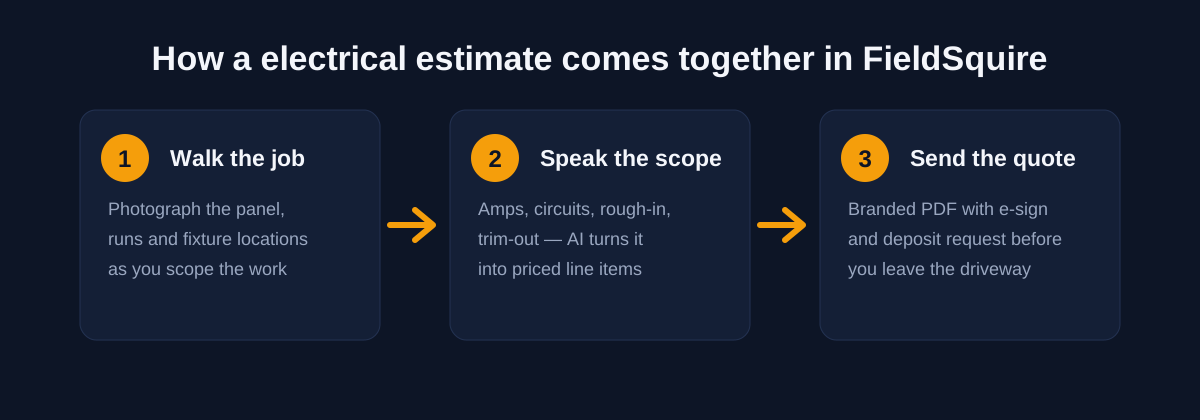
In FieldSquire the loop has three moves. Walk the job and record voice notes as you go, room by room or task by task, alongside photos of the panel and work areas. The AI turns those notes and photos into an editable line-item estimate — breakers, wire runs, devices, fixtures, labor for rough-in and trim-out. Then you review: adjust a quantity, correct a price, delete a line the customer talked themselves out of. Nothing sends until you send it. The finished quote goes out as a branded PDF, with your markup hidden on every line. This is the workflow the FieldSquire electrical estimating app is built around: walk the job, speak the scope, send the quote.
How to narrate a job like an estimator
The draft is only as good as the narration, so speak like a takeoff sheet. Lead with quantities and ratings: "four AFCI breakers," not "some breakers." Name the wire: "about 120 feet of 12-2 romex," "30 feet of half-inch EMT." Call out conditions that change labor units — finished ceilings, insulation-packed attics, masonry, long runs back to the load center. Flag code items out loud: "GFCI required at both bath receptacles," "panel needs a permit and inspection." State exclusions as you notice them: "no drywall patch on this one." Ten deliberate sentences per room produce a draft that needs edits, not surgery.
Corrections that compound
The first voice-built estimate will need your red pen, and that is by design. FieldSquire's AI pricing learns from your corrections: fix the labor on a panel changeover once and the next service-upgrade draft starts from your number. Over a season, your recurring jobs — device swaps, fixture packages, subpanel adds — converge on drafts you barely touch. Voice capture pairs naturally with quoting from the truck, covered in the post on the mobile electrical estimate app for field electricians, and the underlying method is laid out in how to estimate residential electrical work.
What it costs to talk your way to a quote
FieldSquire's Starter plan runs $19/mo with 25 estimates and 3 AI assists — enough to test voice estimating on real jobs. Pro at $59/mo brings unlimited estimates and full AI assistance, Crew at $99/mo shares the system across up to five people, and the FieldSquire site has the details. Every plan opens with a 14-day free trial.
Voice estimating questions from working electricians
How accurate is a voice-generated electrical estimate?
The voice note sets the scope; you control the numbers. FieldSquire drafts line items from what you said and prices them from your own list, then you review and correct before anything sends. The AI learns from those corrections.
What should I say in a voice note to get good line items?
Speak counts, types, and conditions: "six recessed fixtures, two three-way switches, one 20-amp GFCI circuit to the garage, about 80 feet of romex, finished ceiling below." Quantities and conditions turn speech into priceable lines.
Does voice estimating work with photos too?
Yes, and they work best together. Photograph the panel and problem areas, and narrate what photos cannot say — distances, conditions, customer requests. FieldSquire combines both into one draft.
Next walkthrough, leave the notepad in the truck. Start a 14-day free trial of the voice-driven estimating app for electricians and talk your next quote into existence.