
Roofing Estimate App With Photos: Quote What You Can Prove

A roofing estimate app with photos does two jobs at once. It captures the condition of the roof the day you walked it, and it feeds those pictures straight into the quote you send. No more scrolling a camera roll at 9 p.m. trying to remember which house had the rotted decking. The photo sits next to the line item it justifies.
Why photos belong in every roofing estimate
Roofs hide their problems. From the driveway, a two-layer tear-off looks like a one-layer job. Cracked pipe boots, lifted ridge cap, and chewed-up valley flashing only show up when you're on the shingles. If you estimate from memory, you either pad the number to cover the unknowns or you eat the difference later.
Photos fix both problems. Shoot the eave edge and you can count layers before you price the tear-off. Shoot the decking and you have grounds for a sheathing-replacement allowance. Shoot the chimney and the customer understands why the flashing line costs what it costs. Homeowners rarely argue with a picture of their own roof.
What to photograph on the roof walk
Keep a routine so nothing gets missed. A solid photo set for an asphalt shingle job covers:
- All four slopes — wide shots for pitch, steepness, and overall condition.
- Eaves and rakes — a close-up at the edge shows layer count and drip edge condition.
- Every penetration — pipe boots, vents, skylights, and the chimney flashing.
- Valleys and ridge — worn valley metal and cracked ridge cap are easy upsells to document.
- Soft spots — anywhere the decking flexes underfoot, mark it and shoot it.
- The property — driveway, siding, and landscaping, so pre-existing damage is on record before the dumpster arrives.
Ten minutes of shooting saves an hour of second-guessing when you build the numbers.
From photos to priced line items
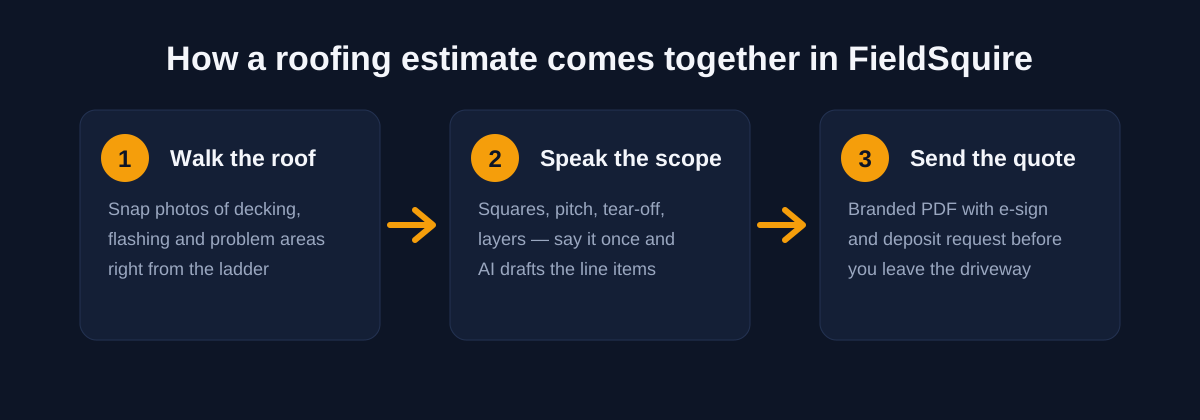
This is where an app earns its keep. In FieldSquire, you take the job photos and record a quick voice note while you're still on site — "28 squares, 7/12 pitch, two layers of 3-tab coming off, architectural shingles going on, synthetic felt, ice and water shield at the eaves, new drip edge all around, three pipe boots." The AI turns that into an editable line-item estimate: tear-off priced per square with the extra layer, underlayment, materials with your waste factor, labor, and disposal fees.
You review each line, adjust anything, and the pricing learns from your corrections over time. Your own price list drives the numbers, and hidden profit margins stay on your side of the screen — the customer only sees the finished proposal. If you like working by voice, the voice-to-estimate walkthrough for roofers goes deeper on that piece.
Photos protect the price after you win the job
Change orders go smoother with a paper trail. When tear-off exposes rot you flagged in the estimate photos, the conversation is short: here is the picture from the walk, here is the decking allowance we discussed. Compare that with arguing about plywood over the phone with no evidence. Photos also settle "your crew damaged my gutter" claims fast, because you documented the gutter before setting a ladder on it.
The estimate itself becomes a sales tool too. A quote backed by pictures of this specific roof reads as diligence. A one-page number with no context reads as a guess. When two bids are close, the contractor who showed their work usually gets the call.
Common questions about photo-based roofing estimates
Do photos make a roofing estimate more accurate?
Yes. Photos catch what memory drops: a third layer at the eave, soft decking near the chimney, missing drip edge, rusted step flashing. When you build the estimate, the pictures push you to price every line, so fewer surprises eat your margin mid-job.
Can I attach roof photos to the quote the customer sees?
With FieldSquire, photos and voice notes feed the AI draft, and the customer receives a clean branded PDF proposal with e-signature and deposit collection built in. You control what supports the scope — markup and margins stay hidden.
What photos should I take before estimating a reroof?
All four slopes, every penetration and flashing point, the eaves for layer count, gutters for granule loss, attic decking if accessible, and the surrounding property so pre-existing damage is documented before tear-off.
If you want the full field routine — measuring, scoping, and sending the quote before you leave the driveway — read how to estimate a roofing job from your phone. Then put it to work: the FieldSquire roofing estimating app turns photos and voice notes into a signed proposal, and plans start at $19/month with a 14-day free trial. Walk the job, speak the scope, and let the photo-based roofing estimate app handle the paperwork.