
How to Estimate a Plumbing Job on Site, Step by Step
Knowing how to estimate a plumbing job on site is the difference between selling the work while the customer is motivated and joining a stack of "we'll get back to you" bids. The steps don't change whether it's a leaking angle stop or a whole-house repipe: walk it, break it down, price it honestly, protect the number, deliver it fast. The method below works whether your tools are a legal pad or an app — though the last step gets a lot faster with the app.
Step 1: Walk the job before you talk numbers
Resist quoting from the doorway. Walk the full run of the problem: follow supply lines to the source, find the main shut-off and test that it actually closes, check pipe material — copper, PEX, CPVC, or galvanized that's due to fail somewhere else next. Look at the water heater even if it isn't the call; its age and condition tell you about the whole system. Photograph everything you'd want to remember in a dispute: existing damage, seized valves, DIY repairs from a previous owner.
Step 2: Break the scope into phases and tasks
Small repair? List the tasks: pull and reset the toilet, new wax ring and closet bolts, two supply lines. Bigger job? Phase it the way the inspection schedule runs — rough-in, top-out, trim-out — with DWV and supply work identified in each. Phasing does two things: it forces you to mentally build the job before pricing it, which is where forgotten scope gets caught, and it gives the customer a quote that explains itself. This is the heart of how to estimate a plumbing job on site: if you can't list the tasks standing in the room, you can't price them accurately from your kitchen table either.
Step 3: Price materials real, price labor burdened
Materials at today's supply house prices plus your markup — not what fittings cost when you memorized the numbers. Labor at your burdened rate: wage plus insurance, truck, fuel, and overhead spread across actual billable hours. Then apply honest task times, including the parts that don't feel like work: protecting floors, draining lines, waiting for solder joints to cool before pressure testing, cleanup, and the walkthrough with the customer at the end. Whether you present the result as flat rate or time-and-materials, the underlying math is the same.
Step 4: Add margin, allowances, and exclusions
Profit goes on top of cost — it is not the same thing as your wage. Add allowances for anything unselected (fixtures, finish choices) and written exclusions for anything unverifiable: concealed pipe condition, slab work if a leak turns out to run under concrete, drywall repair if that's not you. An estimate without exclusions isn't brave, it's unpriced risk, and on-site is exactly where you have the evidence to write them well.
Step 5: Deliver the quote before you leave the driveway
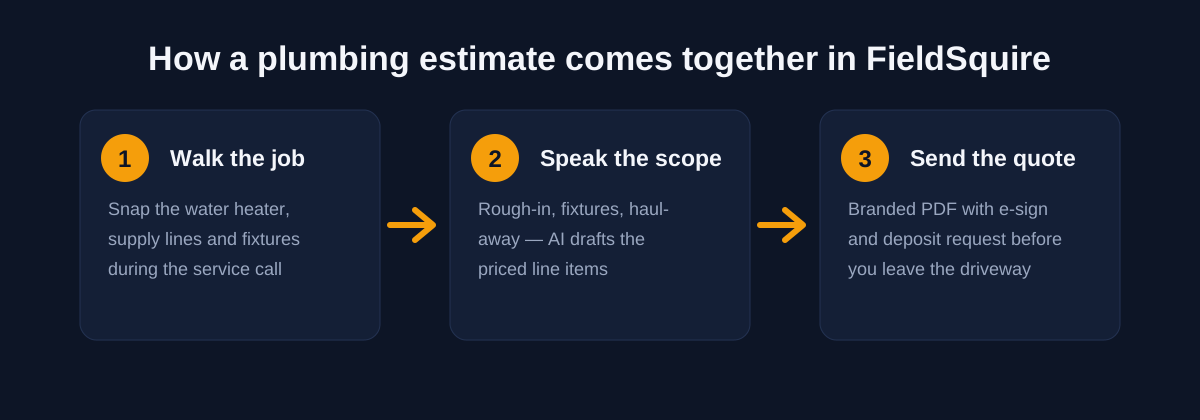
Here's where most plumbers lose jobs they already earned. The walkthrough was solid, the math was right — and then the quote took three days to arrive. This is the step a plumbing estimating app collapses. With FieldSquire, the photos you already took and a spoken scope note become an editable line-item estimate priced from your own list, with your margin hidden from the customer's view. Review it in the truck, send the branded PDF, and take an e-signature and deposit while the problem is still today's problem. Plans start at $19/month with a 14-day free trial — and if you're currently rebuilding every quote in a spreadsheet, see our honest look at a plumbing estimate template vs an estimating app.
On-site plumbing estimating questions
How long should an on-site plumbing estimate take?
A service repair: 10–15 minutes including the walkthrough. A repipe or remodel: 30–45 minutes of proper documentation. The target is a final price, not a fast draft.
What labor rate should I use when estimating plumbing work?
Your burdened rate — wages plus insurance, truck, tools, and overhead divided by real billable hours. Quoting from bare wage is why busy shops stay broke.
Should I give the customer a price before leaving the house?
Yes, whenever scope is knowable; on-site prices close best. If concealed conditions control the price, quote the diagnostic step on the spot instead of nothing.
The method is yours; the speed is FieldSquire's. Start a free 14-day trial of the estimating app built for plumbing contractors and turn your next walkthrough into a signed job on site.